salvete
model -
01
Textile Napkins
Textile napkins are a symbol of sophistication, hospitality, and professionalism in the catering and restaurant industry. In addition to their aesthetic role, they must provide exceptional durability, easy maintenance, and a pleasant feel to the touch.
Craftsmanship Styles:
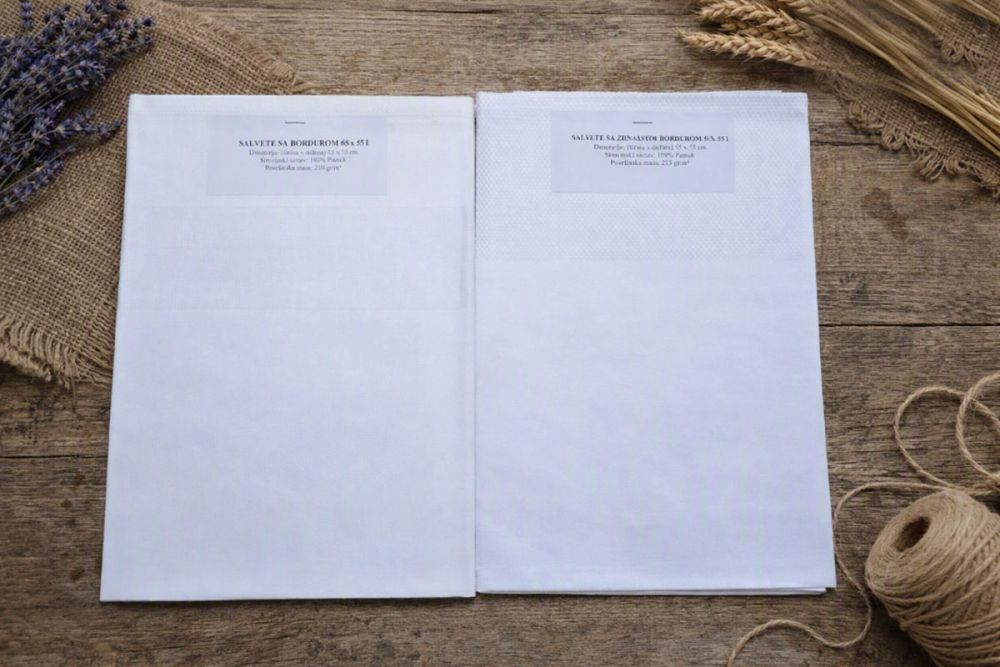
Smooth napkins (Minimalism and elegance): - Features: These napkins have a completely uniform, smooth texture across their entire surface, without any patterns or texture transitions. - Application: Perfect for modern, minimalist restaurants and formal occasions where a understated, clean design is emphasized. They are exceptionally suitable for more intricate and creative folding techniques (decorative folding).
Bordered napkins (Classic luxury): - Features: They are recognizable by a subtle woven frame (border) running a few centimeters from the outer edge of the napkin. The border can be a satin band, jacquard weave, or delicate embroidery. - Application: They bring a traditional, refined look and are most commonly used in classic restaurants with a long tradition, luxury hotels, and formal banquets. The border gives the napkin visual depth and structure.
Hemming Techniques and Hem Widths
The quality of edge finishing determines how long the napkin will last and how it will look when spread out on the table. We offer three standard widths and a premium finishing technique:
Standard hem (1 cm, 2 cm, 3 cm):
- 1 cm hem: Thin, discreet, and lightweight hem, ideal for smaller napkins and daily use.
- 2 cm hem: The most sought-after balance in hospitality, giving the napkin optimal weight and stability.
- 3 cm hem (Substantial hem): A wide, rich hem that elevates the napkins into the premium category. It adds extra weight, ensuring they lay perfectly flat on the table and hold their shape.
Mitred corner hem (Envelope / Mitred Corner): - Features: This is the pinnacle of tailoring precision where the corners of the napkin join at an exact 45-degree angle, creating an envelope-like appearance. - Advantages: There is no unsightly fabric bulking at the corners, the edges are completely straight and elegant, and the napkin retains its perfect geometric shape even after hundreds of washes.
Standard Napkin Dimensions
Depending on the meal type and serving style, choose between the following dimensions:
- 30 x 30 cm and 35 x 35 cm (Cocktail and Breakfast): Smaller dimensions, ideal for serving coffee, cocktails, breakfast, or dessert meals.
- 40 x 40 cm and 45 x 45 cm (Standard Lunch/Dinner): The most versatile and best-selling hospitality dimensions. They provide enough material for imaginative folding into crowns, fans, or cutlery pockets.
- 50 x 50 cm (Formal Banquets and Fine Dining): Large, luxurious napkins reserved for gala dinners, weddings, and exclusive restaurants where maximum comfort is provided to guests.
Material Compositions and Care
The choice of material directly affects the price, appearance, ease of ironing, and stain removal:
- 100% Cotton (Damask / Twill): A completely natural material with superior absorbency and a pleasant feel against the skin. Cotton damask has a subtle sheen and is considered the gold standard of hospitality. Note: Requires thorough ironing.
- Blend (Cotton / Polyester - 50/50): The most practical choice for busy restaurants. Polyester prevents wrinkling, speeds up drying, and makes it easier to remove stubborn grease and wine stains, while cotton retains softness and absorbency.
- 100% Polyester with Teflon Protection: Modern napkins that do not absorb liquid immediately; instead, spilled drinks remain in drops on the surface and can simply be wiped away. Extremely durable, non-shrinking in the wash, and require no ironing.
- 100% Linen: The most luxurious, eco-friendly material with a distinctive, coarser texture. Ideal for rustic venues, eco-resorts, and luxury home dining. The more they are washed, the softer they become.
Classic Tones: White and Cream
When it comes to high-end hospitality and formal table settings, white and cream are the absolute standard. These two neutral colors do not follow fleeting trends.
- When to choose WHITE: If you own a wedding venue or a modern, international cuisine restaurant with plenty of natural light.
- When to choose CREAM: If you run a traditional Italian or national restaurant, wine tavern, or rustic hotel. A cream napkin is much more forgiving under dim evening light or candlelit dinners, as it does not reflect light aggressively and creates